

Apple finally unwrapped the iPhone Duo after years of leaks and rumours that claimed the company has been working on a foldable. Early impressions from reviewers and YouTubers are surprisingly consistent: the hinge and the crease aren't the headline anymore. I got my hands on the iPhone Duo last week, and I used it for a bit to see whether what's turning heads is really the device's software. The good news is Apple didn't just shrink iOS to fit a fold. Why this feels fresh and exciting is that, for years, foldables running Android have seen UI that's stretched across two screens with some polishing, and brands calling it a day.
Apple seems to have actually gone to the drawing board to figure out how you're supposed to use a foldable device. On the iPhone Duo, the dock moves and multitasking behaves differently depending on how you're holding it. The best part is that even the animation when you open the Duo does real work, not just looks pretty and resizes. It's the kind of detail that's easy to miss in a spec sheet but impossible to ignore once you've used it for some time.
iPhone Duo: Hardware That Steps Out of the Way
This is Apple's first foldable; the hardware matters, even if it's not the main story. The iPhone Duo is packed to the brim and looks solid. The Duo closes into a compact, passport-shaped phone with a 5.4-inch Super Retina XDR outer cover screen, and opens into a 7.6-inch Super Retina XDR display that almost reminds you of the iPad mini. Compared with other foldables on the market, the matte finish on the inner display adds finesse to the overall device, as it limits glare and fingerprint smudges.
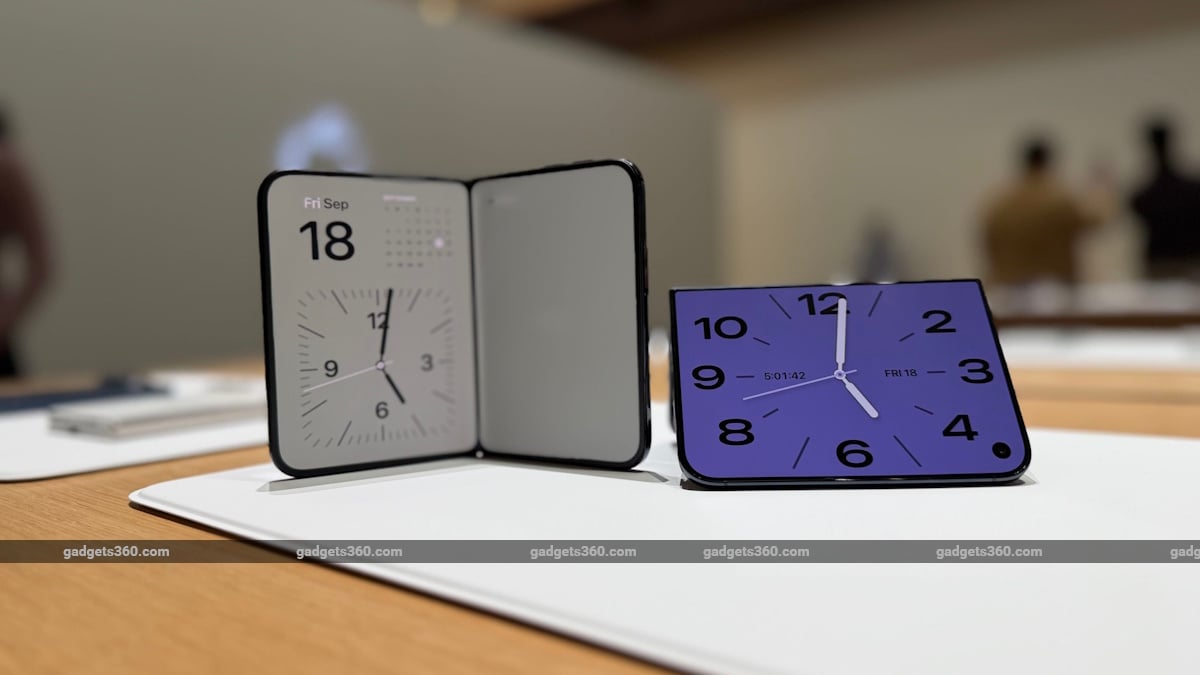
Apple claims that when opened, it's the thinnest iPhone with the largest display ever
Apple has used the nano-texture matte finish from its MacBook and iPad Pro lineups. The crease is there if you look for it, but it's far less obvious than on a few foldables on the market.
The titanium frame feels solid in the hands, and the curved edges sit well in the palm. The hinge holds at odd angles without wobbling, which matters more than it sounds once you use it in tent mode for a clock or prop it up for texting on a table. Of course, all of this adds a bit of heft, which is good for a device priced this much. Then there's no telephoto lens, so it doesn't win any spec war. The hardware does its job quietly, and it is competent, occasionally excellent, and mostly just the stage for what's happening on screen. Under the hood, the phone packs an A20 Pro chip and comes with a vapour chamber.
iPhone Duo: Foldable-Only UI Is the Real Story
The first thing I noticed after picking up the iPhone Duo is the interface custom-designed for this foldable. Aesthetically and in button placement, the iPhone Duo puts the dock and main app controls on the right edge of the screen instead of the bottom, which sounds small until you realise it's designed around how you actually hold the phone open, one hand on each side. On the cover screen, it also quietly solves the asymmetry problem created by the phone's shape.
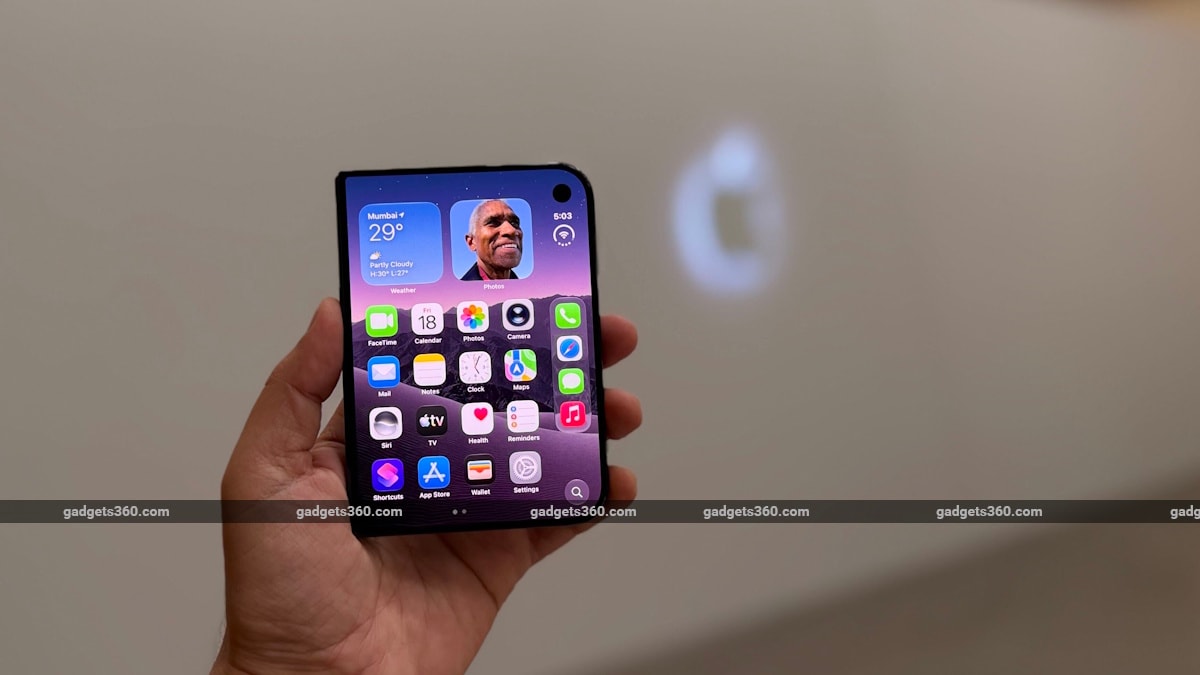
The Duo is compact and comfortable to hold and has essential controls moved to the side
For multitasking, the Duo seems built for jumping from one app to another. Like other foldables, you can drag an app out of the dock while another is already open, and it snaps into the other half of the screen automatically, just like the iPad. You can also pull an app back toward the centre, and it goes full-screen again. The entire flow feels natural, and you don't have to look for a button to pin the app to open it in full-screen mode.
Then there are the different tilt modes that genuinely don't exist on Android. You can bend the phone slightly, and it drops into a split mode on its own, useful for propping the phone on a table with video on one side and WhatsApp on the other, where you can continue your conversation. Once folded, it switches to a vertical standby layout with room for widgets like a bedside clock, photos, widgets, and more with StandBy.
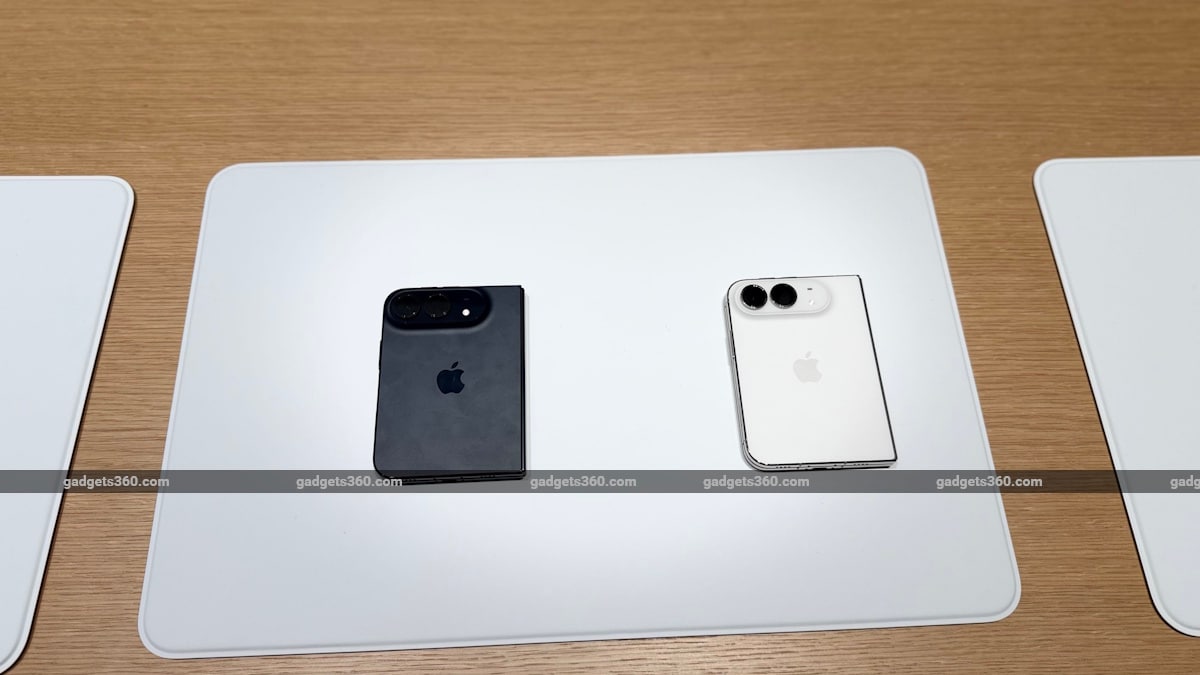
It comes in Night Sky and Star White colours
The open-close animation on the Duo isn't just for show. It's built so the outer screen looks like a small window into the bigger one as it unfolds, with a soft blur effect that makes the whole transition feel like one continuous interface rather than two separate screens pretending to be one.
The iPhone Duo isn't flawless. The split-screen setup currently supports only full- or half-screen apps, with nothing in between, and if you fold the phone mid-use, it doesn't remember your multitasking layout. We may see more updates in the coming weeks before the phone goes on pre-order on October 16 and goes on sale from October 23.
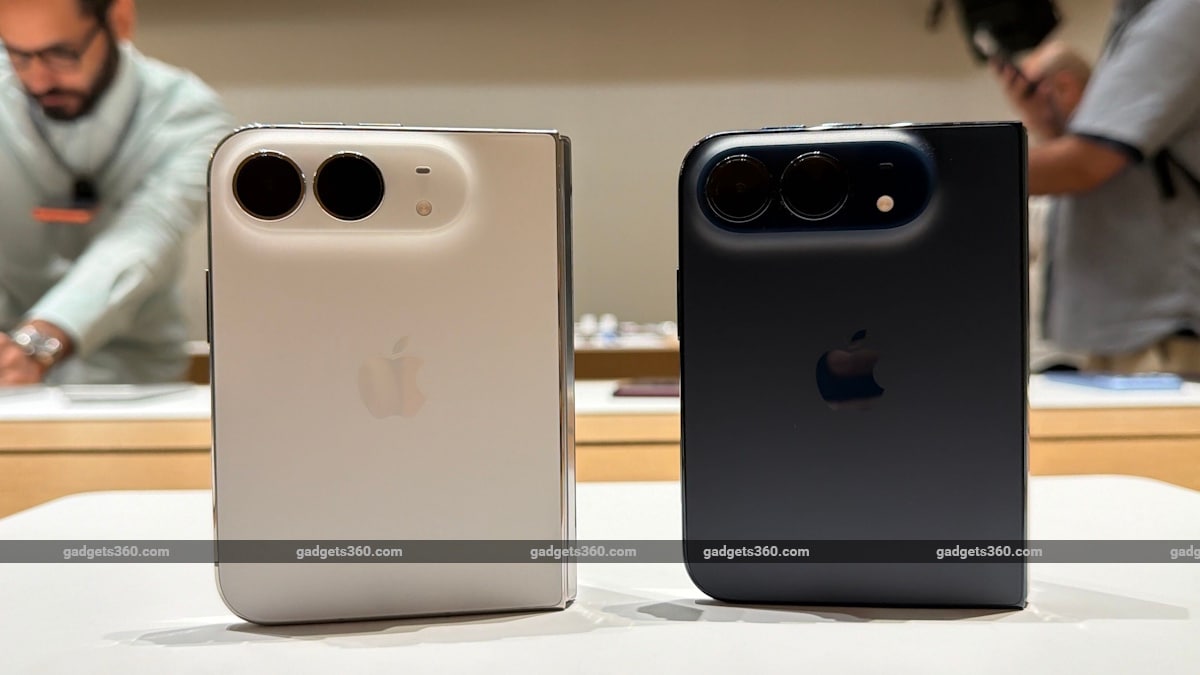
It sports two 48-megapixel main and ultra-wide rear cameras
Left-handed users might also have a genuine complaint, as every control is locked to the right edge. Hopefully, a future OTA update can fix this.
iPhone Duo: Initial Thoughts
The iPhone Duo feels like a refresh in the iPhone lineup that has been waiting for a foldable for years. The hardware, from the sturdy hinge to the nano-texture glass, sets a remarkably high baseline. But a week into hands-on testing, the takeaway isn't that Apple made a folding screen; it's that they built a software experience that finally justifies having one.
from NDTV News- Special https://ift.tt/F4LKcVq

 Hello, my name is Jack Sparrow. I'm a 50 year old self-employed Pirate from the Caribbean.
No comments:
Post a Comment